Topics


The end of year twelve

Tallebudgera 1977Brisbane Airport 1978


To my dear son Jonathan, who completes his final year of school this month.

Twenty-nine years ago this month I finished year twelve at Oxley State High School.

The photos above are like book-ends for that year. The one on the left is at senior camp, end of year eleven, just before we embarked on our final year. The photo on the right is after the last day of school when one of our mates, William, was very sad to be leaving town to fly to Adelaide, so we all went to the airport to say goodbye.

The last few weeks of that year are a blur – exams, parties, excitement, thinking about uni, and planning to always keep in touch with my school mates. Collectively we thought we were the best bunch that had ever come through Oxley State High, and we were going to make sure we didn’t forget each other.

I had a calendar on the wall where I used to cross off the days until it was over. To my surprise, the last day came much quicker than I anticipated, and now, almost thirty years later I realize that the time has flown and now my own kids are doing what I did.

If my Dad had given me advice then, I wouldn’t have listened to it. So I’m not going to offer you any advice now. But I do hope you remember how brutally fast our life can fly by. We get caught up in so many things, and before we know it, the magical times of our late teens and early twenties are gone. And I also hope you remember good friends.

There are two good friends from 1978 that mean a lot to me. Greg, who is with me in both these photos. is still my friend. He still has the love for life and the easy laid-back attitude that he did in his late teens. He’s a great guy to spend time with.

And then there’s my best friend from 1978, who I’m married to now. In year twelve I couldn’t beleive how lucky I was to be with Liz. And today, I still can’t beleive how lucky I am.

Enjoy this special time, Jonathan.

I hope the time passes slowly enough for you to savour it.

On yer bike!

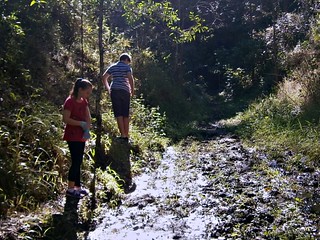
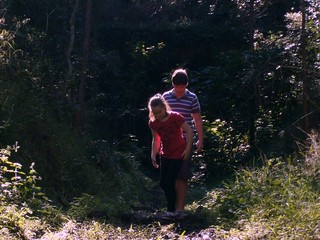
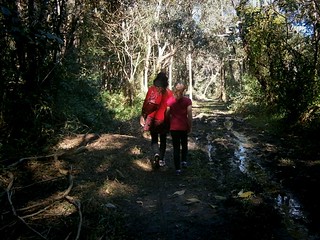
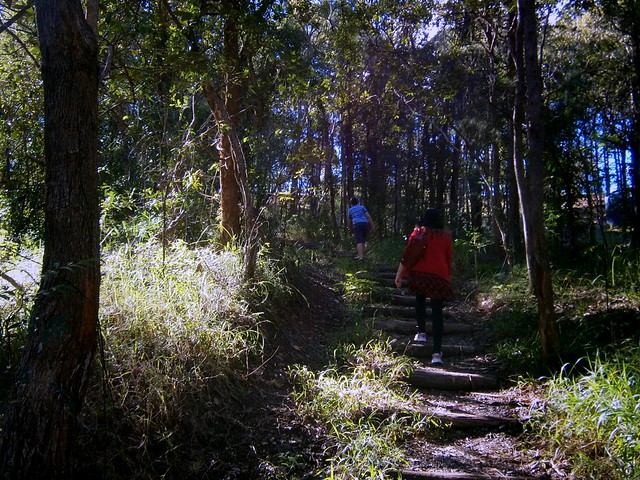
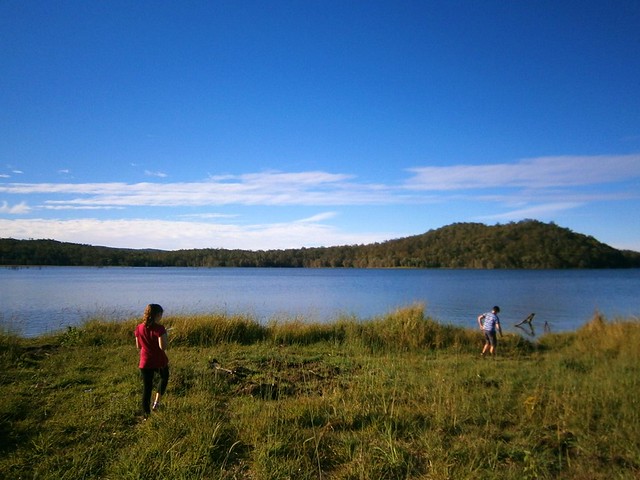
I took Steve and Harrison on a bike ride this morning, along the North Pine River, up to Lake Samsonvale, and then back along the North Pine Rover.

It was a hoot! A little bit slower than normal, because Harrison is only 9 and his bike is a bit worse for wear. But it was fun all the same.

And I got to try out a new program for my Nokia N95 mobile phone. Nokia Sports Tracker Uses the inbuilt GPS on the phone to record speed and height info. While you’re cycling, your N95 acts like a speedo, and odometer, showing you all the vital stats. But when you get home, you click the button, and upload the data to sports tracker.

The really cool thing is that if you take any photos with the phone on your journey, it will upload and geotag them.

So the map on the left here is where we went. You can drag and zoom it if you want more detail.

But the fun part is that the data is also uploaded to the Sportstracker community. Here’s a link to the data for our ride today. If you tick the “altitude” box, you can see every hill, and how fast we were going.

The thing I like most about this technology is that it adds to the fun of getting out and exercising. At times I’ve found it hard to overcome my inertia to regularly exercise. In regards to exercise, if it makes me think “Oh yeah! I want to do that again!” then I think it’s a great thing.

Oh – and you can use Sports Tracker for running, walking, skiing, rowing – whatever floats your boat.

P.S. I’ve ordered a mounting bracket to attach my phone to my handlebars. Till that arrives, I’m using some of Lilly’s hair ties :)

WW2 – 70 years ago today

I feel like a midget standing beside giants when I think of the people who lived through the six years of World War Two.

It started 70 years ago today.

I’ve never fought in a war. No one has ever dropped a bomb on my house. None of my immediate family has ever been killed or injured in an armed conflict. I’ve never had to contend with the idea that a foreign power wanted to invade my country. I’ve never lived through rationing. I’ve never had to go into a bomb shelter.

To all you wonderful people who endured all of this and more, thank you.

Thanks for not giving up, for hoping, for enduring.

We live in a better world today because of you.

The Secret Pony

Lilly came to me today and read me her partially completed story.

“What else should I write, Daddy?” she asked.

And I replied, “Kids understand magic when they’re your age, but as they grow up most adults forget about it. So I’m not the best person to ask about what to write. You know much more about magic than what I do”.

“But what about Doctor Seuss and Mem Fox”, Lilly retorted. (She’s very astute for her age).

“Ahhh. Doctor Seuss and Mem Fox never forgot what it was like to be a kid”, I answered. “That’s why they’re both so good at what they do”.

Seems like I’ve got a lot of “remembering” to do. Adults are so boring, and such a large part of our lifespan is devoted to being “grown up”. Childhood is so brief….

So brief it makes me want to cry at the tragedy of it all.

“The Secret Pony by Lilly Ennis

Onec upon a time there lived a butyful
girl named cloe. One day when cloe was in the
garden picing strorbries she
found a secret passag throe the garden. it was so butyful. So she wen throe it.
When she got to the end of the secret passag sge sore a pony. It was so butyful.
It had long heir and sparkerling blue eyes. The pony gace her lots of spechal
yummy treats. They played together to but the most imporint thing is that there
friends. The End.”

Don’t forget how to be a kid, Lilly. Once you forget, it’s a long time being a grown-up.

How to Outrun an Antelope

The bushman hunters of the Kalahari Desert hunt the Kudu antelope by pursuing it through the heat of the day until it collapses from exhaustion.

The Kudu is faster than the bushman hunter, but the hunter is relentless. He perseveres, and in the end, the antelope is no match for the bushman.

This might seem extreme. In the 21st century it seems unheard of that a person can outrun an antelope. But a human running on two legs over long distances is more efficient than an animal running on four. In addition to this, humans perspire all over their body, which is a more effective way of reducing body temperature, especially in the midday heat. Having two hands free means the hunter can carry water to replace the perspiration.

Humans are the only primates that hunt in this way. “Persistence hunting” was part of humanity’s evolution. So it’s really part of our age-old genetic make up. The average person on the street might not look capable of outrunning an antelope over five hours in 40 degree heat, but that’s how we caught our food before we invented bows and arrows.

Persistence is in our genes. It’s our heritage. We can persevere because we’ve done it before. Imagine what we can achieve if we don’t give up.

As the Roman poet Persius said: “He conquers who endures”.

Don’t give up!

The Most Important Questions.


Himalayan Moonrise By Swamysk

If you’re really interested in the answer, read on! To those people who I get annoyed at when you interrupt my train of thought (you know who you are) please forgive me. I want to be a better person.

Three Questions – by Leo Tolstoy

One day it occurred to a certain emperor that if he only knew the answers to three questions, he would never stray in any matter.

What is the best time to do each thing? Who are the most important people to work with? What is the most important thing to do at all times?

The emperor issued a decree throughout his kingdom announcing that whoever could answer the questions would receive a great reward. Many who read the decree made their way to the palace at once, each person with a different answer.

In reply to the first question, one person advised that the emperor make up a thorough time schedule, consecrating every hour, day, month, and year for certain tasks and then follow the schedule to the letter. Only then could he hope to do every task at the right time.

Another person replied that it was impossible to plan in advance and that the emperor should put all vain amusements aside and remain attentive to everything in order to know what to do at what time.

Someone else insisted that, by himself, the emperor could never hope to have all the foresight and competence necessary to decide when to do each and every task and what he really needed was to set up a Council of the Wise and then to act according to their advice.

Someone else said that certain matters required immediate decision and could not wait for consultation, but if he wanted to know in advance what was going to happen he should consult magicians and soothsayers.

The responses to the second question also lacked accord.

One person said that the emperor needed to place all his trust in administrators, another urged reliance on priests and monks, while others recommended physicians. Still others put their faith in warriors.

The third question drew a similar variety of answers. Some said science was the most important pursuit. Others insisted on religion. Yet others claimed the most important thing was military skill.

The emperor was not pleased with any of the answers, and no reward was given.

After several nights of reflection, the emperor resolved to visit a hermit who lived up on the mountain and was said to be an enlightened man. The emperor wished to find the hermit to ask him the three questions, though he knew the hermit never left the mountains and was known to receive only the poor, refusing to have anything to do with persons of wealth or power. So the emperor disguised himself as a simple peasant and ordered his attendants to wait for him at the foot of the mountain while he climbed the slope alone to seek the hermit.

Reaching the holy man’s dwelling place, the emperor found the hermit digging a garden in front of his hut. When the hermit saw the stranger, he nodded his head in greeting and continued to dig. The labor was obviously hard on him. He was an old man, and each time he thrust his spade into the ground to turn the earth, he heaved heavily.

The emperor approached him and said, “I have come here to ask your help with three questions: When is the best time to do each thing? Who are the most important people to work with? What is the most important thing to do at all times?”

The hermit listened attentively but only patted the emperor on the shoulder and continued digging. The emperor said, “You must be tired. Here, let me give you a hand with that.” The hermit thanked him, handed the emperor the spade, and then sat down on the ground to rest.

After he had dug two rows, the emperor stopped and turned to the hermit and repeated his three questions. The hermit still did not answer, but instead stood up and pointed to the spade and said, “Why don’t you rest now? I can take over again.” But the emperor continued to dig. One hour passed, then two. Finally the sun began to set behind the mountain. The emperor put down the spade and said to the hermit, “I came here to ask if you could answer my three questions. But if you can’t give me any answer, please let me know so that I can get on may way home.”

The hermit lifted his head and asked the emperor, “Do you hear someone running over there?” The emperor turned his head. They both saw a man with a long white beard emerge from the woods. He ran wildly, pressing his hands against a bloody wound in his stomach. The man ran toward the emperor before falling unconscious to the ground, where he lay groaning. Opening the man’s clothing, the emperor and hermit saw that the man had received a deep gash. The emperor cleaned the wound thoroughly and then used his own shirt to bandage it, but the blood completely soaked it within minutes. He rinsed the shirt out and bandaged the wound a second time and continued to do so until the flow of blood had stopped.

At last the wounded man regained consciousness and asked for a drink of water. The emperor ran down to the stream and brought back a jug of fresh water. Meanwhile, the sun had disappeared and the night air had begun to turn cold. The hermit gave the emperor a hand in carrying the man into the hut where they laid him down on the hermit’s bed. The man closed his eyes and lay quietly. The emperor was worn out from the long day of climbing the mountain and digging the garden. Leaning against the doorway, he fell asleep. When he rose, the sun had already risen over the mountain. For a moment he forgot where he was and what he had come here for. He looked over to the bed and saw the wounded man also looking around him in confusion. When he saw the emperor, he stared at him intently and then said in a faint whisper, “Please forgive me.”

“But what have you done that I should forgive you?” the emperor asked.

“You do not know me, your majesty, but I know you. I was your sworn enemy, and I had vowed to take vengeance on you, for during the last war you killed my brother and seized my property. When I learned that you were coming alone to the mountain to meet the hermit, I resolved to surprise you on your way back to kill you. But after waiting a long time there was still no sign of you, and so I left my ambush in order to seek you out. But instead of finding you, I came across your attendants, who recognized me, giving me this wound. Luckily, I escaped and ran here. If I hadn’t met you I would surely be dead by now. I had intended to kill you, but instead you saved my life! I am ashamed and grateful beyond words. If I live, I vow to be your servant for the rest of my life, and I will bid my children and grandchildren to do the same. Please grant me your forgiveness.”

The emperor was overjoyed to see that he was so easily reconciled with a former enemy. He not only forgave the man but promised to return all the man’s property and to send his own physician and servants to wait on the man until he was completely healed. After ordering his attendants to take the man home, the emperor returned to see the hermit. Before returning to the palace the emperor wanted to repeat his three questions one last time. He found the hermit sowing seeds in the earth they had dug the day before.

The hermit stood up and looked at the emperor. “But your questions have already been answered.”

“How’s that?” the emperor asked, puzzled.

“Yesterday, if you had not taken pity on my age and given me a hand with digging these beds, you would have been attacked by that man on your way home. Then you would have deeply regretted not staying with me. Therefore the most important time was the time you were digging in the beds, the most important person was myself, and the most important pursuit was to help me. Later, when the wounded man ran up here, the most important time was the time you spent dressing his wound, for if you had not cared for him he would have died and you would have lost the chance to be reconciled with him. Likewise, he was the most important person, and the most important pursuit was taking care of his wound. Remember that there is only one important time and is Now. The present moment is the only time over which we have dominion. The most important person is always the person with whom you are, who is right before you, for who knows if you will have dealings with any other person in the future. The most important pursuit is making that person, the one standing at you side, happy, for that alone is the pursuit of life.”

Leo Tolstoy

What are you passionate about?


Life is short.

We’re often told by self-improvement gurus to pursue the things we’re passionate about – and spend our life doing the things that count, rather than things that don’t matter.

But to do this, we need to think about what makes us excited, what arouses our passions, what’s really important to us.

So I’m doing a simple experiment. I’m asking the world “What are you passionte about”? I think considering what excites other people is a good way to get you thinking about the things that are important to ourselves.

So please tell me.

If you’re too embarrassed to post a reply publicly, just send me an anonymous message.

I’ll publish the best answers here.

No Leave No Life

Anyone else recognize the uncanny similarity between the photo on the Australian Governments “No Leave No Life” campaign, and the Flag Raising in Iwo Jima?

Starclouds Over Coolum


Starclouds #2
Originally uploaded by MagicTyger

Here’s my second attempt at capturing star clouds.

We had a great three day break at Coolum Beach. The nights were dark, so I took the tripod up to the roof terrace, and fired off a few shots.

I was amazed at how well the Canon 50mm lens could pick up.

“The world is just awesome”

This is an ad for Discovery Channel that’s well worth watching.

As many friends and family know, I hate ads, but this one is different. It really makes you feel good.

Many thanks to John Conners for his excellent blog article about “The March of Time”